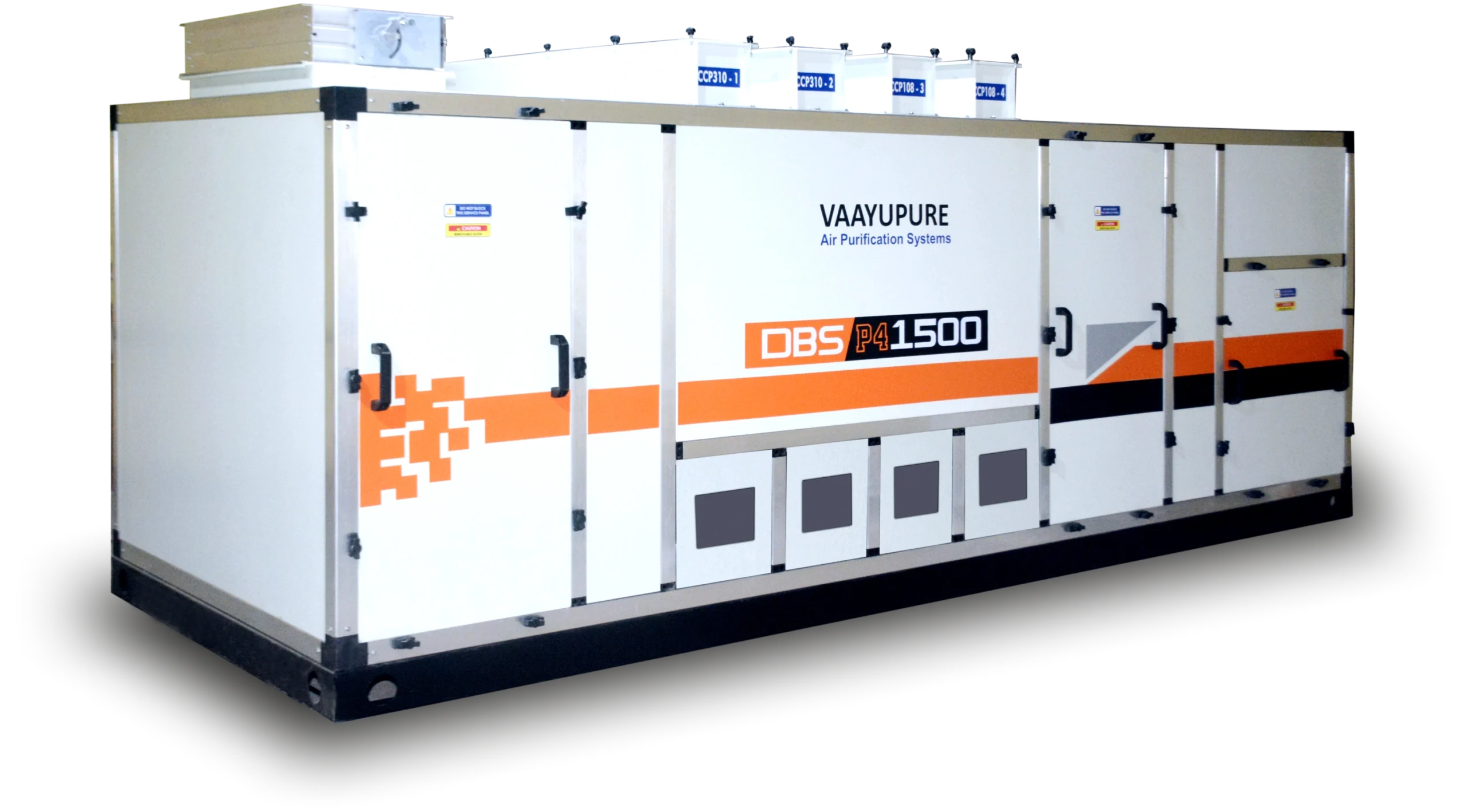

Why Precision Humidity Control is Non-Negotiable for Drug Stability
Why Precision Humidity Control is Non-Negotiable for Drug Stability
In the highly regulated world of pharmaceuticals, some threats are obvious—contamination, supply chain disruption, and formulation errors. But there’s a silent saboteur at work 24/7, an invisible force that can undermine months of careful research and production without a single warning sign: uncontrolled humidity.
For pharmaceutical professionals, precision humidity control isn’t an optional luxury; it’s a mission-critical imperative for protecting drug stability, ensuring Good Manufacturing Practice (GMP) compliance, and ultimately, safeguarding patient safety.
Just last month, I spoke with “David,” a seasoned QA Director at a mid-sized generics firm. He recounted the helpless feeling of discovering that a $2.1 million batch of a crucial life-saving antibiotic had been rendered worthless. The culprit wasn’t a material defect or a process error. It was a standard HVAC system failure over a single weekend. The facility’s relative humidity spiked to 72% for a mere 14 hours. There were no immediate visual cues, no alarms ringing off the hook. Yet, weeks later during final QC testing, the data was undeniable: the powder had undergone irreversible caking, leading to catastrophic dissolution failures. The entire batch, destined for patients in critical care, had to be destroyed.
David’s story is a stark reminder of a terrifying reality: humidity excursions are the silent killers of pharmaceutical integrity, capable of sabotaging a product long before the damage becomes apparent.
The scale of this problem is staggering. Industry analyses reveal a concerning trend:
- Over 38% of global drug recalls in 2024 cited stability failures as the root cause. A deeper dive into this data shows that humidity-related issues were implicated in nearly 60% of these cases, ranging from API degradation to microbial growth.
- The financial toll is immense, with conservative estimates placing annual product losses due to inadequate environmental control in the pharmaceutical sector at over $4.5 billion.
- Regulatory scrutiny is intensifying. The FDA’s 2025 cGMP audit data consistently shows that humidity-related deviations—from inadequate monitoring to unvalidated control systems—remain a recurring top-10 finding, leading to costly 483s and warning letters.
This isn’t just about compliance or cost. It’s about the fundamental promise of quality and safety that underpins the entire industry. This article will explore the science behind humidity’s destructive power, identify the most vulnerable stages of manufacturing, and provide a clear roadmap for implementing a robust, compliant, and non-negotiable humidity control strategy.
Why Precision Humidity Control is Non-Negotiable for Drug Stability
To understand the solution, we must first respect the problem. Think of water molecules in the air as tiny, relentless saboteurs, constantly seeking to infiltrate and dismantle your carefully formulated products. The measure of their threat is Relative Humidity (RH)—the percentage of water vapor present in the air compared to the maximum amount that air could hold at a specific temperature. At 25°C and 50% RH, the air is holding half the moisture it’s capable of. While a simple concept, its implications for drug stability are profound.
When RH gets out of control, these molecular troublemakers launch a multi-pronged attack, instigating chemical, physical, and microbiological degradation.
The Chemical Assault: Degradation from Within
Excess moisture acts as a catalyst and a transport medium for reactions that break down Active Pharmaceutical Ingredients (APIs) and excipients.
- Hydrolysis: This is the most common form of moisture-induced chemical degradation. Water molecules literally cleave the chemical bonds of an API, breaking it down into less effective or even harmful substances. Drugs with ester, amide, or lactam functional groups—such as aspirin, many penicillins, and statins—are notoriously susceptible. The result is a direct and often rapid loss of potency, rendering the drug ineffective.
- Oxidation: While oxygen is the primary culprit in oxidation, moisture plays a critical role as an accelerant. It can dissolve trace metal ions from container surfaces, which then catalyze oxidative reactions. This often manifests as discoloration (e.g., powders turning yellow or brown), the formation of unwanted impurities, and a shortened shelf life.
- Deliquescence: This is a catastrophic failure mode for highly hygroscopic (water-absorbing) powders. At a specific “critical relative humidity,” the substance absorbs so much atmospheric moisture that it dissolves and becomes a liquid solution. This not only destroys the product’s physical form but can also dramatically accelerate further chemical degradation.
The Physical Assault: Compromising Form and Function
Even when the API remains chemically intact, humidity can wreak havoc on a drug’s physical properties, affecting its manufacturability and bioavailability.
- Caking and Clumping: Powders and granulations exposed to high RH can form hard clumps or cakes. This destroys flowability, leading to significant problems in downstream processes like tablet compression (causing dose variations) and capsule filling.
- Polymorphic Transformation: Many APIs can exist in multiple crystalline forms, or polymorphs, each with different solubility and stability profiles. Moisture can trigger a transformation from a stable, effective form to a less stable or less bioavailable one, fundamentally altering the drug’s performance in the body.
- Tablet Integrity: For solid dosage forms, moisture can soften tablets, decrease their hardness, and cause them to swell or disintegrate prematurely. For coated tablets, it can make the coating sticky, cause it to peel, or alter the drug release profile.
The Microbial Threat: An Invitation for Contamination
Beyond chemical and physical damage, high humidity creates a fertile breeding ground for microorganisms. The key metric here is Water Activity (aw), which measures the “available” water that microbes can use to grow. Most bacteria, yeasts, and molds cannot proliferate below a water activity of 0.60. Uncontrolled humidity can easily raise the water activity of a product above this critical threshold.
| Aspect | Chemical Impact | Microbial Impact |
|---|---|---|
| Mechanism | Hydrolysis, oxidation reactions, molecular rearrangement. | Proliferation of mold, bacteria, and yeast. |
| Resulting Degradation | API breakdown, color changes, potency loss, impurity formation. | Contaminated lots, biofilm and endotoxin formation, failure of preservatives. |
| Timeline | Days to weeks, often unnoticed until QC testing. | Hours to days, creating immediate bioburden risk. |
| Risks | Shorter shelf life, product recalls, therapeutic failure. | Regulatory action, cleanroom contamination, direct patient safety hazards. |
Actionable Warning Signs You Cannot Ignore:
- Tablets that feel sticky, have lost their sheen, or disintegrate unexpectedly.
- Powders that have lost their free-flowing nature and clump together like wet sand.
- Previously clear solutions that have turned cloudy or developed crystals.
- Unexplained potency drops or the appearance of new impurity peaks during routine stability testing.
These are not minor quality hiccups; they are glaring red flags that your environmental control has failed and moisture has already begun its destructive work
Vulnerable Touchpoints: Mapping Humidity Risk in Pharma Manufacturing
Humidity is a persistent threat that targets nearly every phase of pharmaceutical production. Think of your manufacturing process as a relay race where humidity is the opponent trying to trip your runners at every handoff. Identifying these critical control points is the first step toward building a robust defense.
- Raw Material Storage and Dispensing: The battle begins here. Many excipients, such as microcrystalline cellulose (MCC), starches, and lactose, are highly hygroscopic. If these materials absorb moisture from the air before they even enter the production suite, they introduce uncontrolled water into the formulation from the very start, leading to downstream processing nightmares.
- Granulation and Drying: This is a high-stakes balancing act.
- Wet Granulation: Inconsistent humidity in the processing suite affects the evaporation rate of the granulating fluid, leading to granules that are either too wet or too dry. This results in unpredictable particle sizes and poor compressibility.
- Fluid Bed Drying: The RH of the inlet air directly dictates the efficiency and duration of the drying cycle. High ambient humidity means the dryer has to work harder and longer to achieve the target moisture content, increasing energy costs and cycle times.
- Tablet Compression and Coating: This is arguably the most humidity-sensitive operation in solid dosage manufacturing.
- Compression: Hygroscopic powders can become sticky, leading to “picking” (material sticking to the punch faces) and “sticking” (material building up on the die wall). This results in tablet defects, weight variations, and costly press downtime.
- Coating: The tablet coating process is a delicate dance of spraying, drying, and mixing. High RH can prevent the coating solution from drying properly, leading to a cascade of defects: tacky surfaces causing tablets to stick together (“twinning”), peeling or cracking of the film (“orange peel” effect), and color variations.
- Real-World Case: A major generic manufacturer recently lost over 30,000 units of a pediatric antihypertensive tablet. The cause was traced to a 12-hour humidity excursion to 70% RH in the coating suite. This created tacky, non-uniform coatings that failed visual inspection and dissolution tests. The direct financial loss exceeded $180,000, not including the immense cost of the deviation investigation, regulatory paperwork, and delayed market entry.
- Lyophilization (Freeze-Drying): In this process, water is both friend and foe. While the goal is to remove water, the “moisture-hungry” nature of the finished lyophilized cake makes it incredibly vulnerable. Ambient humidity during the loading of vials into the lyophilizer or, more critically, during unloading and stoppering, can allow moisture to be reabsorbed. This can compromise the stability of sensitive biologics and reduce the product’s shelf life.
- Packaging Operations: Your primary packaging is the final barrier against moisture. However, if the packaging operation itself occurs in a high-humidity environment, you are effectively sealing moisture inside the blister pack or bottle with the product. This completely negates the protective qualities of expensive barrier films and can lead to stability failures even in a perfectly designed package.
| Feature | Desiccant Dehumidifiers | Refrigerant (Condensing) Dehumidifiers |
|---|---|---|
| Core Mechanism | Adsorbs water vapor onto a solid desiccant material (e.g., silica gel rotor). | Cools air below its dew point, forcing moisture to condense on cold coils. |
| Capacity (kg/hr H₂O removal) | Medium to Very High (5-500+ kg/hr). Highly scalable. | Low to Medium (2-50 kg/hr). |
| Minimum Achievable RH | Can reliably achieve <5% RH. | Limited to ~35-40% RH. Coils freeze at lower temperatures. |
| Precision Control | Excellent (±1-2% RH). | Modest (±5% RH). |
| Energy Efficiency (at low RH) | Superior when operating below 35-40% RH. | Becomes highly inefficient at low RH due to risk of freezing. |
| Capital Investment | Higher upfront cost. | Lower upfront cost. |
| Operating Cost | Lower long-term operating costs in low-RH applications. | Higher operating costs when pushed to its limits. |
For general comfort in office spaces, refrigerant systems are adequate. However, for critical pharmaceutical processes, they have a fatal flaw: they cannot effectively operate below about 35-40% RH. As they cool the air to condense moisture, their coils approach freezing temperatures, leading to ice buildup and a complete loss of efficiency.
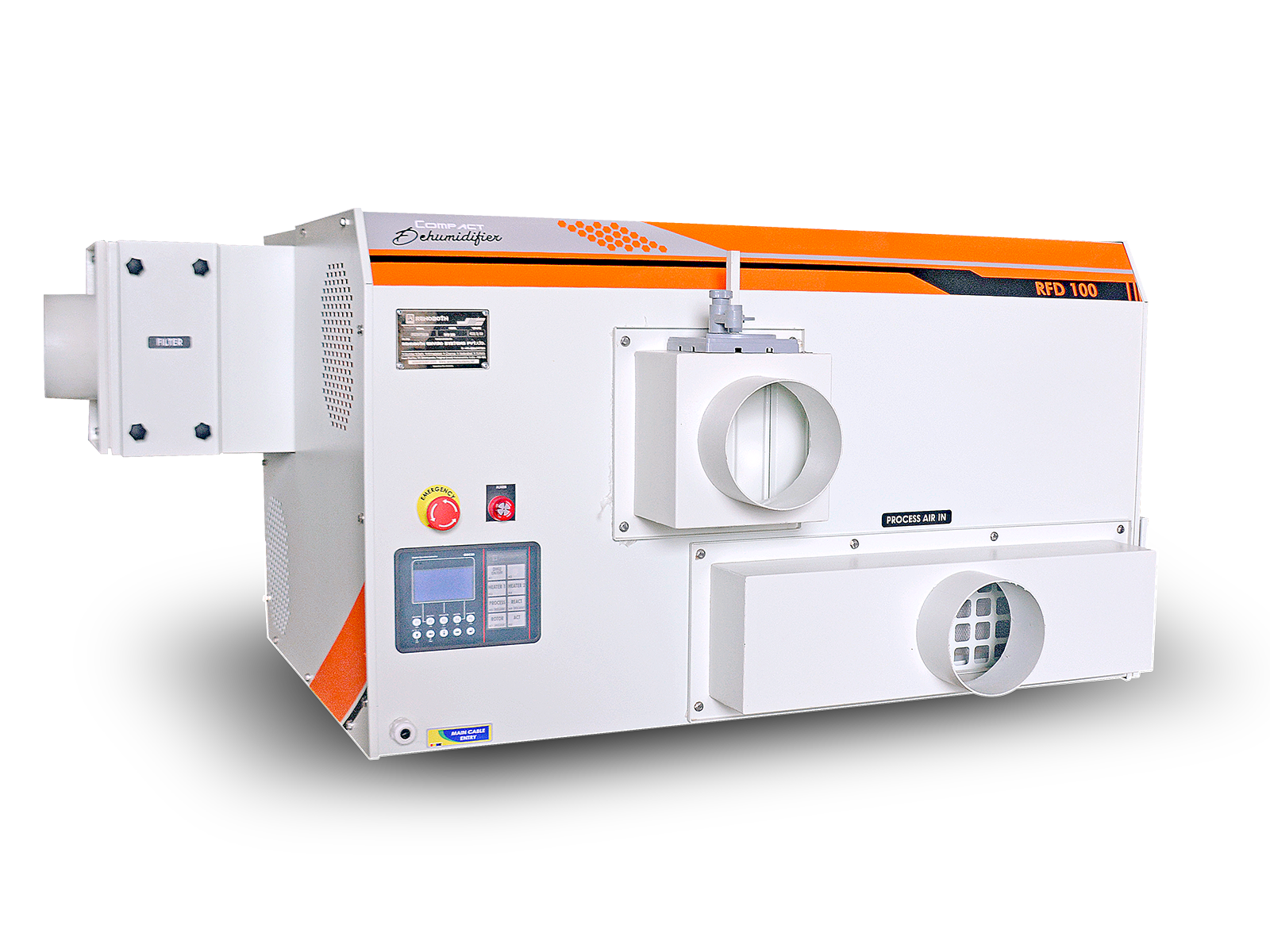
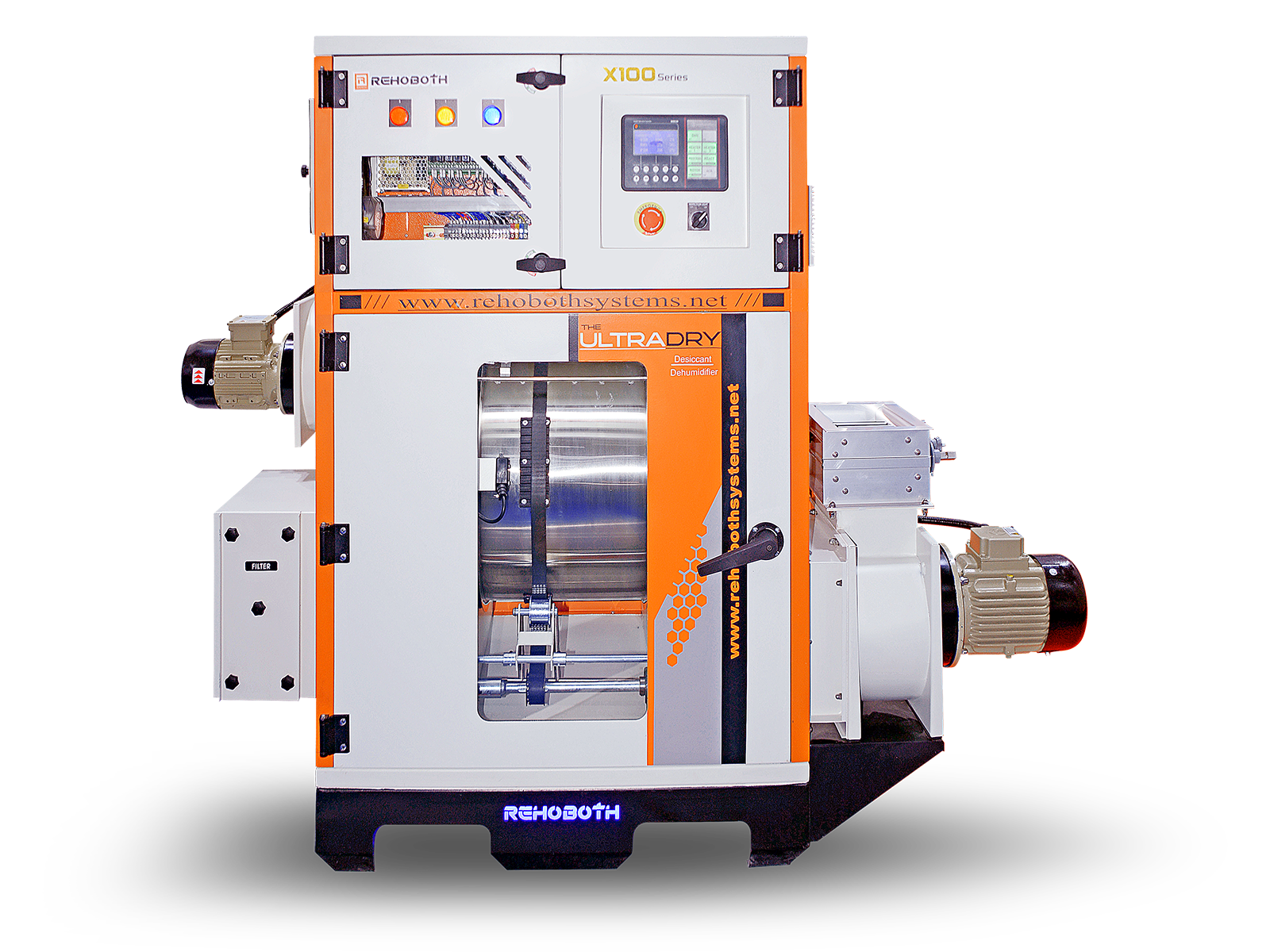
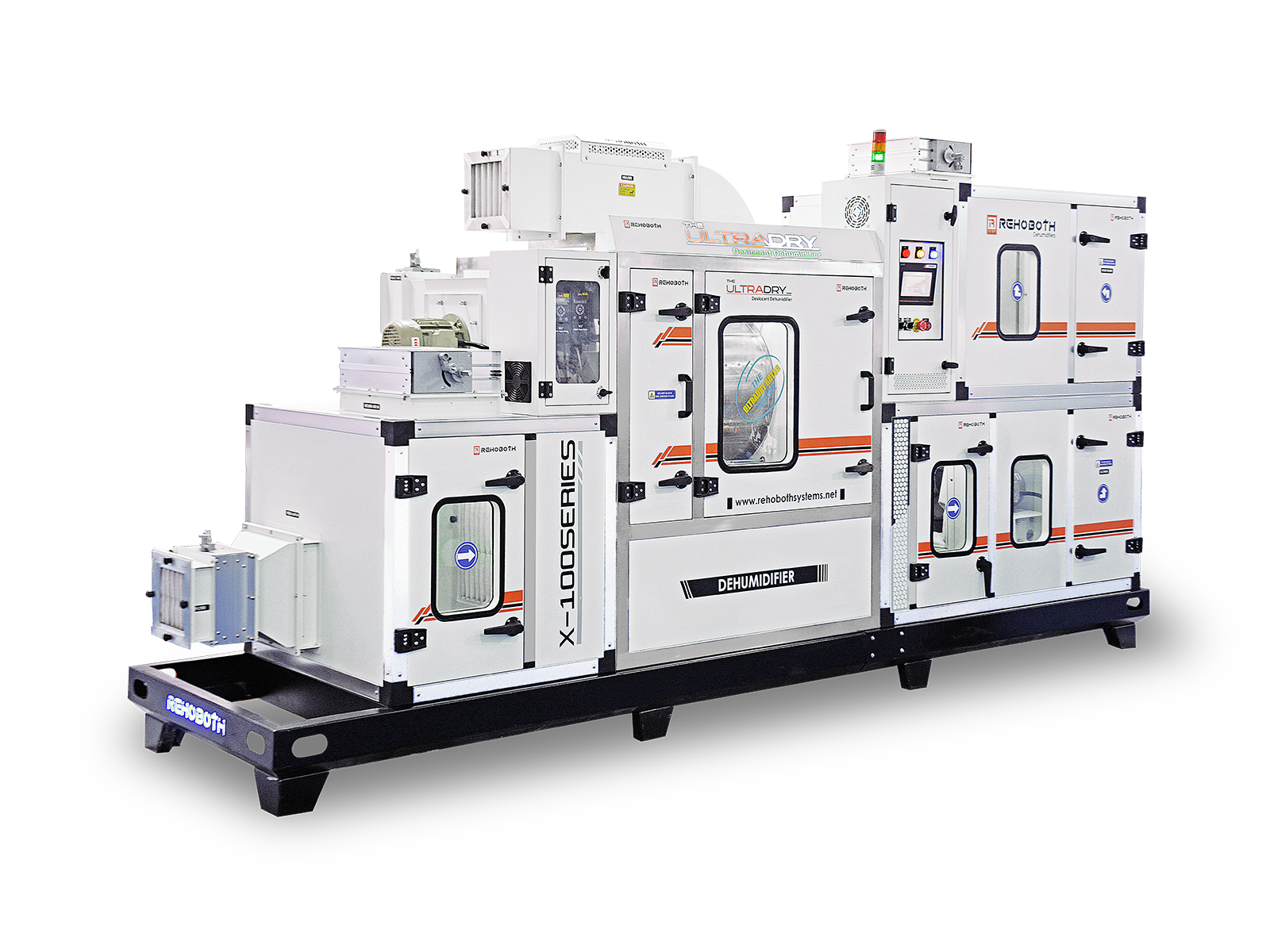
This is where desiccant dehumidifiers become non-negotiable. They don’t rely on cooling to remove moisture. Instead, they use a rotating wheel impregnated with a desiccant material that naturally adsorbs water molecules from the process air. A separate, heated stream of “reactivation” air then removes this moisture from the desiccant and exhausts it outside the building. This mechanism allows desiccant systems to achieve extremely low and precise humidity levels (down to 1% RH) regardless of the ambient temperature.
- Case Study Success: A 250 m² cleanroom facility in Denmark, producing a highly hygroscopic API, was struggling with seasonal batch failures. Their conventional HVAC system could not maintain the required 30% RH during the humid summer months. After retrofitting their environmental control with a dual desiccant system in late 2024, the results were transformative. They could achieve and maintain 30% RH (±2%) year-round. This single change led to an 18% improvement in batch yield and, more impressively, a 72% reduction in contamination-related rejections in the following quarter.
Ensuring GMP Compliance and Regulatory Adherence
Regulatory bodies like the U.S. FDA, European Medicines Agency (EMA), and the Pharmaceutical Inspection Co-operation Scheme (PIC/S) don’t just recommend humidity control—they mandate it as a cornerstone of current Good Manufacturing Practice (cGMP). Humidity-related deviations are low-hanging fruit for inspectors, as they signal a fundamental lack of control over the manufacturing environment.
An auditor’s goal is to verify that your systems are robust, validated, and continuously monitored. They will scrutinize your records with a keen eye for inconsistencies. Here’s what they expect to see:
- Validated and Mapped Environments: You must prove that your storage areas and manufacturing suites consistently maintain the required conditions. This isn’t just about placing one sensor on a wall. It requires a formal Temperature and Humidity Mapping study to identify hot and cold spots and ensure uniformity throughout the space, as stipulated by guidelines like ICH Q1A for stability testing. Standard conditions for long-term stability (e.g., 25°C/60% RH) must be maintained with minimal deviation.
- Continuous, Calibrated Monitoring: Manual checks with a handheld hygrometer twice a day are no longer defensible. The regulatory expectation, codified in documents like the FDA’s guidance on cGMP, is for continuous, real-time monitoring using a network of calibrated sensors. The system must be 21 CFR Part 11 compliant, with secure, unalterable data logs and detailed audit trails.
- Robust Alarm and Deviation Management: What happens when a sensor detects an out-of-spec condition? Inspectors will demand to see a documented Standard Operating Procedure (SOP) for alarm response. This must include immediate notification, quarantine of potentially affected product, a thorough and timely investigation to determine the root cause, and implementation of effective Corrective and Preventive Actions (CAPAs).
- Comprehensive Documentation and Data Integrity: You must be able to produce years of audit-ready RH data on demand. This includes not just the humidity logs but also sensor calibration certificates traceable to national standards (e.g., NIST), maintenance records for your dehumidification systems, and all deviation investigation reports. Data must be readily accessible, legible, and secure.
The Blueprint for Bulletproof Humidity Control
Effective humidity management is not a “set it and forget it” activity. It’s a continuous cycle of monitoring, maintenance, and improvement.
A Modern Monitoring Strategy:
Your monitoring system should be your facility’s central nervous system. Modern platforms like Vaisala viewLinc or Rotronic RMS offer more than just data logging. They provide:
- Centralized Oversight: A single dashboard to view the status of all controlled environments.
- Automated Alarming: Instant notifications via email, SMS, or visual alarms, ensuring 24/7 coverage.
- Predictive Analytics: Algorithms that can analyze historical data to predict equipment degradation before a catastrophic failure occurs.
- Effortless Reporting: Automated generation of reports for batch records, quality reviews, and regulatory audits.
Proactive Maintenance is Key:
- Quarterly Health Check:
- Month 1: Calibrate all RH sensors against traceable standards. Investigate any sensor showing a drift of more than ±2% RH.
- Month 2: Test alarm systems. Verify that notifications are received by the correct personnel and that response protocols are followed.
- Month 3: Analyze historical data for trends. Are there seasonal spikes? Does one air handling unit struggle more than others? Use this data to refine your strategy.
- Regular Equipment Service: For desiccant systems, this includes regular inspection and replacement of filters and periodic checks on the desiccant rotor’s performance. For all systems, ductwork must be inspected for leaks and blockages.
- Redundancy Planning: Your most critical areas should be supported by redundant systems. The backup system must be capable of handling 100% of the required load in the event of a primary failure.
Securing Your Products and Your Reputation: An Action Plan
Precision humidity control is not an operational expense; it is a fundamental investment in quality, safety, and brand integrity. The cost of a single humidity-related batch loss or product recall will almost always dwarf the investment in a properly designed environmental control system.
Your 5-Step Humidity Mastery Action Plan:
- Conduct a Comprehensive Risk Audit: Begin with a facility-wide assessment of your current RH control capabilities. Use calibrated data loggers to map your critical process areas and storage zones. Identify your most vulnerable products and processes.
- Engineer a Strategic Upgrade: Based on your audit, invest in validated dehumidification and monitoring technology. Deploy high-performance desiccant systems for critical low-RH areas (granulation, coating, packaging) and use refrigerant systems for less critical zones.
- Implement Intelligent Monitoring: Upgrade to a 24/7 digital monitoring system that is 21 CFR Part 11 compliant. Leverage its automated alarming and analytical capabilities to move from a reactive to a proactive stance.
- Empower Your Team: Conduct comprehensive training for all production, maintenance, and QA staff. Ensure everyone understands why humidity control is critical and what their role is in maintaining the system’s integrity.
- Embrace Continuous Improvement: Establish a quarterly review cycle to assess system performance, analyze trends, update SOPs, and incorporate lessons learned from any deviations.
The return on this investment is clear. Companies that master their environmental controls report significantly fewer rejected batches, a dramatic reduction in humidity-related deviations, and millions of dollars in avoided product losses. More importantly, they build a powerful reputation for quality and reliability that fosters trust with regulators, partners, and the patients who depend on their medicines.
The question isn’t whether you can afford to implement a comprehensive humidity control strategy. The question is, in an industry where quality is a moral imperative, can you afford not to?
Ready to transform your humidity control strategy from a liability into a competitive advantage? Start with a professional audit of your facility and take the first step toward bulletproof environmental control that protects your products, your patients, and your peace of mind.
TL;DR
- Audit humidity hotspots using calibrated data loggers to optimize pharmaceutical humidity control zones.
- Pre-condition APIs and hygroscopic excipients in low-RH rooms to reinforce drug stability from the start.
- Install desiccant dehumidifiers in critical areas like granulation, coating, and packaging to maintain precise (±2%) RH control.
- Implement continuous, 21 CFR Part 11-compliant digital RH monitoring with automated alarms to catch excursions immediately.
- Follow a proactive maintenance schedule, including regular sensor calibration and desiccant rotor checks, to ensure consistent dehumidification performance.
Ensure every batch meets spec—achieve low, stable RH for APIs, coatings, and cleanrooms with Rehoboth’s pharma-ready desiccant dehumidifiers. Speak to an engineer for a tailored solution and audit-ready documentation.
Contact REHOBOTH at Email: sales@rbdeh.com, cmnarang@gmail.com / Phone: +91 9811 599 922.
Your Trusted Partner in Temperature and Humidity Control Solutions