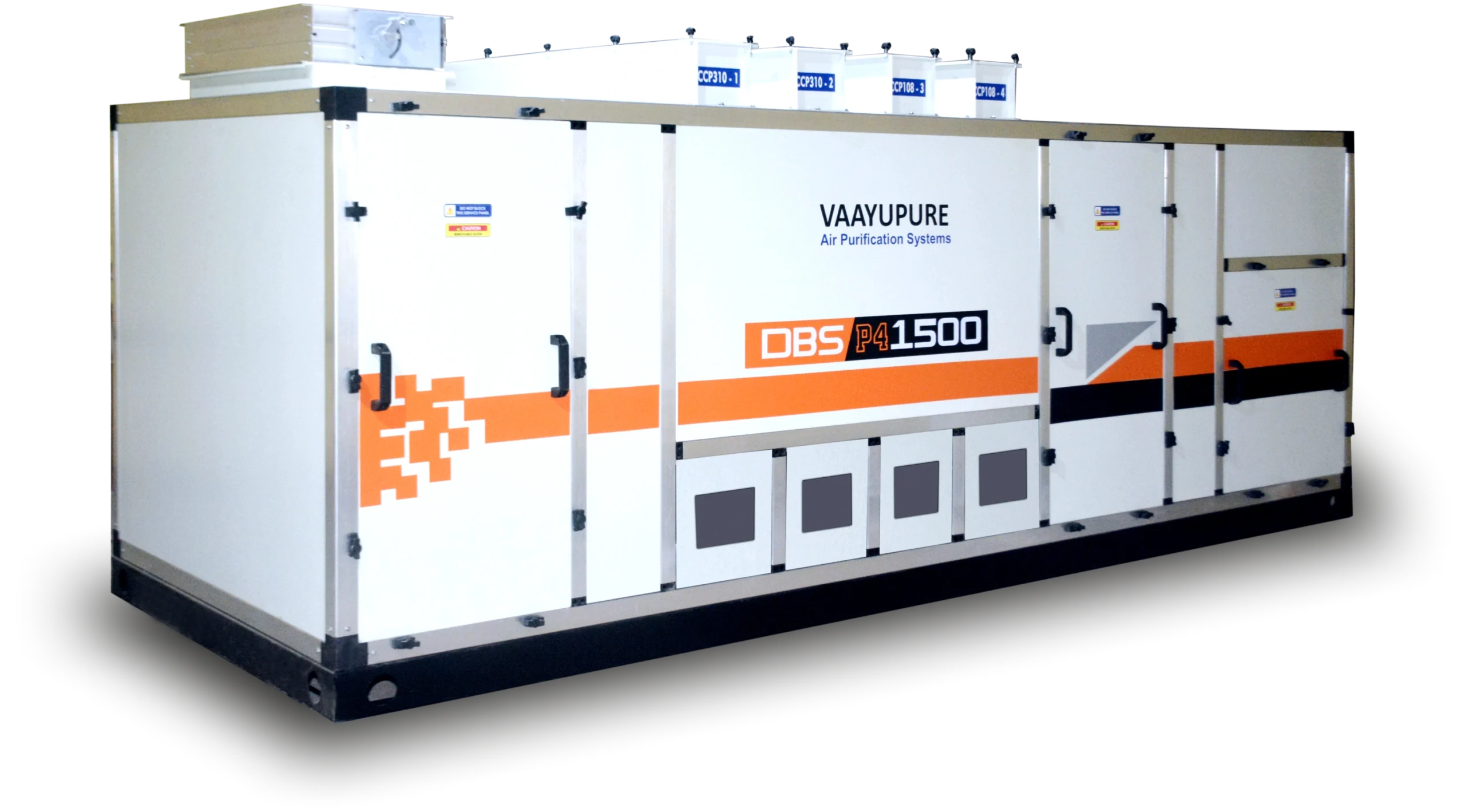

Chemical Plant Dehumidification Corrosion Prevention
Chemical Plant Dehumidification Corrosion Prevention: Essential Strategies for Safe, Efficient Operations
Let me start with this- Why Every Chemical Plant Needs a Dehumidification Audit Today
The harsh reality is that corrosion and ESD risks are often invisible until catastrophic failure occurs. Modern regulatory scrutiny and insurance requirements are tightening, while the cost of downtime continues to skyrocket. The good news? Today’s dehumidification technology is more cost-effective and rapidly deployable than ever before.
Quick Checklist: Signs of Unseen Corrosion and ESD Vulnerability
– Unexplained equipment downtime patterns
– Rust stains or pitting on piping and process skids
– Static shocks or sparks during routine maintenance
– Increased frequency of instrument calibration drift
– Visible condensation on cold surfaces during temperature swings
If any of these sound familiar, it’s time to take action.
How Humidity Drives Corrosion & Electrostatic Discharge Risks
Understanding the science behind humidity control chemical processing is crucial for effective prevention. [Corrosion prevention requires maintaining specific humidity thresholds](https://www.humiscope.com.au/blog-indoor-climate-control/prevent-corrosion), typically below 40-60% relative humidity (RH) for most metals, and even lower for sensitive catalysts and electronics.
The mechanism is straightforward but devastating:
- Dew Point Dynamics: When air temperature drops below the dew point, condensation forms on metal surfaces, creating the perfect electrolyte environment for galvanic corrosion. This isn’t just surface moisture—it’s the catalyst that transforms dormant metal into active corrosion cells.
- Hygroscopic Salt Acceleration: Many chemicals used in processing are hygroscopic, meaning they actively absorb moisture from the air. This creates micro-environments where localized humidity can spike well above ambient levels, accelerating corrosion in unexpected places.
- Critical Humidity Threshold Corrosion: [Research shows that corrosion rates increase exponentially above specific humidity levels](https://bnhgenerators.com/corrosion-in-power-generating-equipment/). For carbon steel, the danger zone starts around 60% RH, while sensitive electronics and catalysts face risks at just 40% RH.
But here’s the twist—electrostatic discharge chemical industry risks follow the opposite pattern. When RH drops below 35%, static buildup becomes dangerous, especially in areas handling flammable solvents or powders. The sweet spot for most chemical plant operations? A tightly controlled 40-50% RH range.
Calculate Your Plant’s Dew Point Risk
Use this simple formula to assess your vulnerability:
Dew Point (°C) = T – ((100 – RH)/5)
Where T is ambient temperature and RH is relative humidity percentage.
If your dew point calculation puts you within 5°C of your coldest equipment surfaces, you’re in the danger zone.
Establish Your “Safe Zone” Humidity Range
– General metals and piping: 40-50% RH
– Electronics and sensitive catalysts: 35-45% RH
– Bulk storage areas: 40-55% RH
– Laboratory spaces: 45-50% RH
Dehumidification Technologies for Chemical Plant Environments
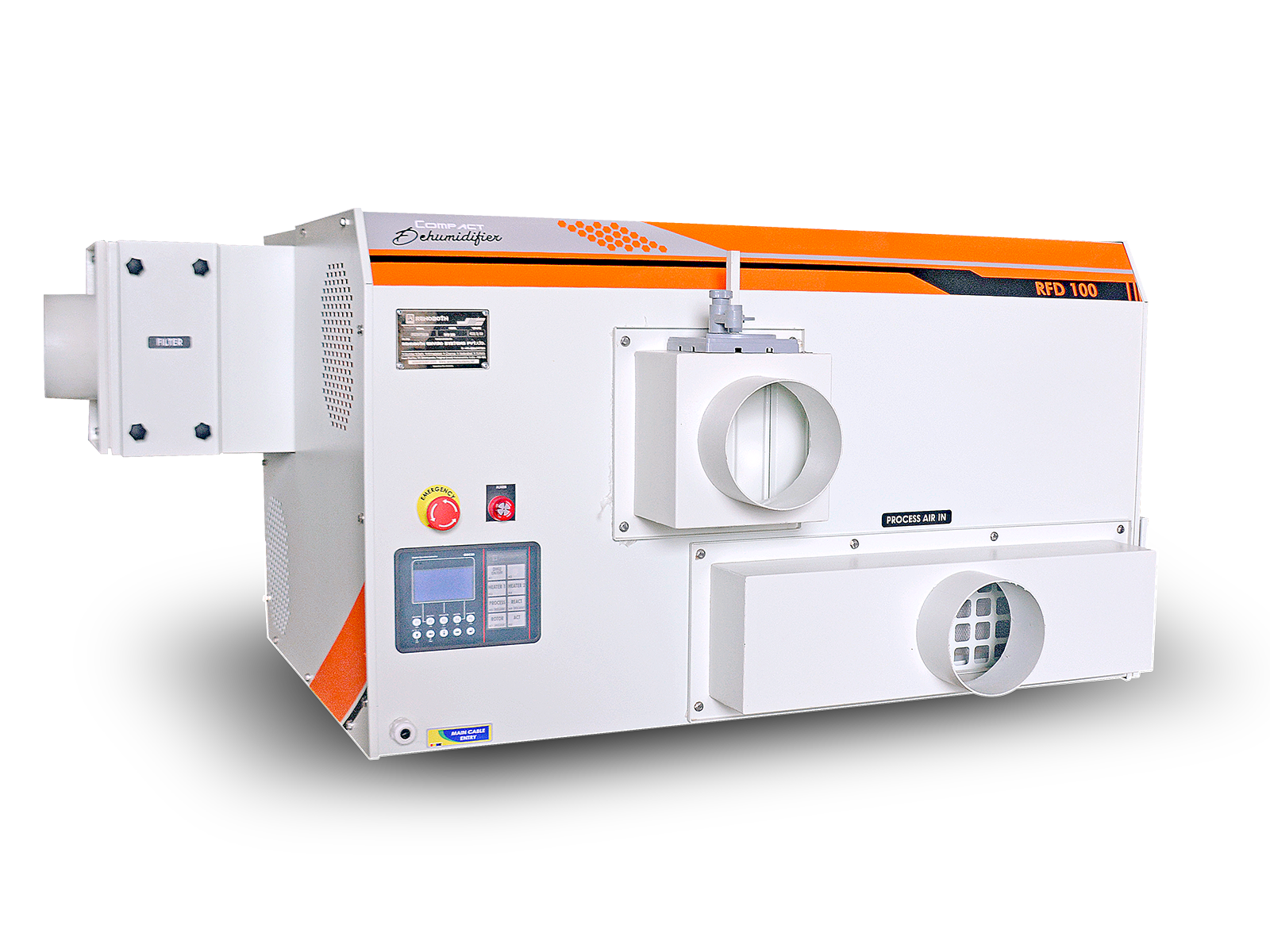
When it comes to desiccant dehumidifiers chemical processing versus traditional refrigerant systems, the choice isn’t always obvious. [Understanding the different technologies available for corrosion mitigation](https://rentdh.com/mitigating-corrosion-in-industrial-facilities-with-dehumidification-technologies-lp/) can make the difference between a successful installation and a costly mistake.
| Feature | Refrigerant Dehumidifiers | Desiccant Rotor Dehumidification |
|---|---|---|
| Operating Principle | Cools air below dew point to condense moisture | Adsorbs moisture onto a rotating desiccant wheel |
| Best Applications | High temperature, high RH environments (>20°C) | Low temperature, low RH, critical process areas |
| Energy Consumption | Moderate, consistent | Higher initially, can utilize waste heat |
| Physical Footprint | Compact, wall-mountable | Larger for equivalent capacity |
| Maintenance Requirements | Simple coil cleaning, filter changes | Rotor regeneration required, more complex |
| Precision Control | Good for general spaces | Excellent for tight tolerance applications |
The Desiccant Advantage in Chemical Plants
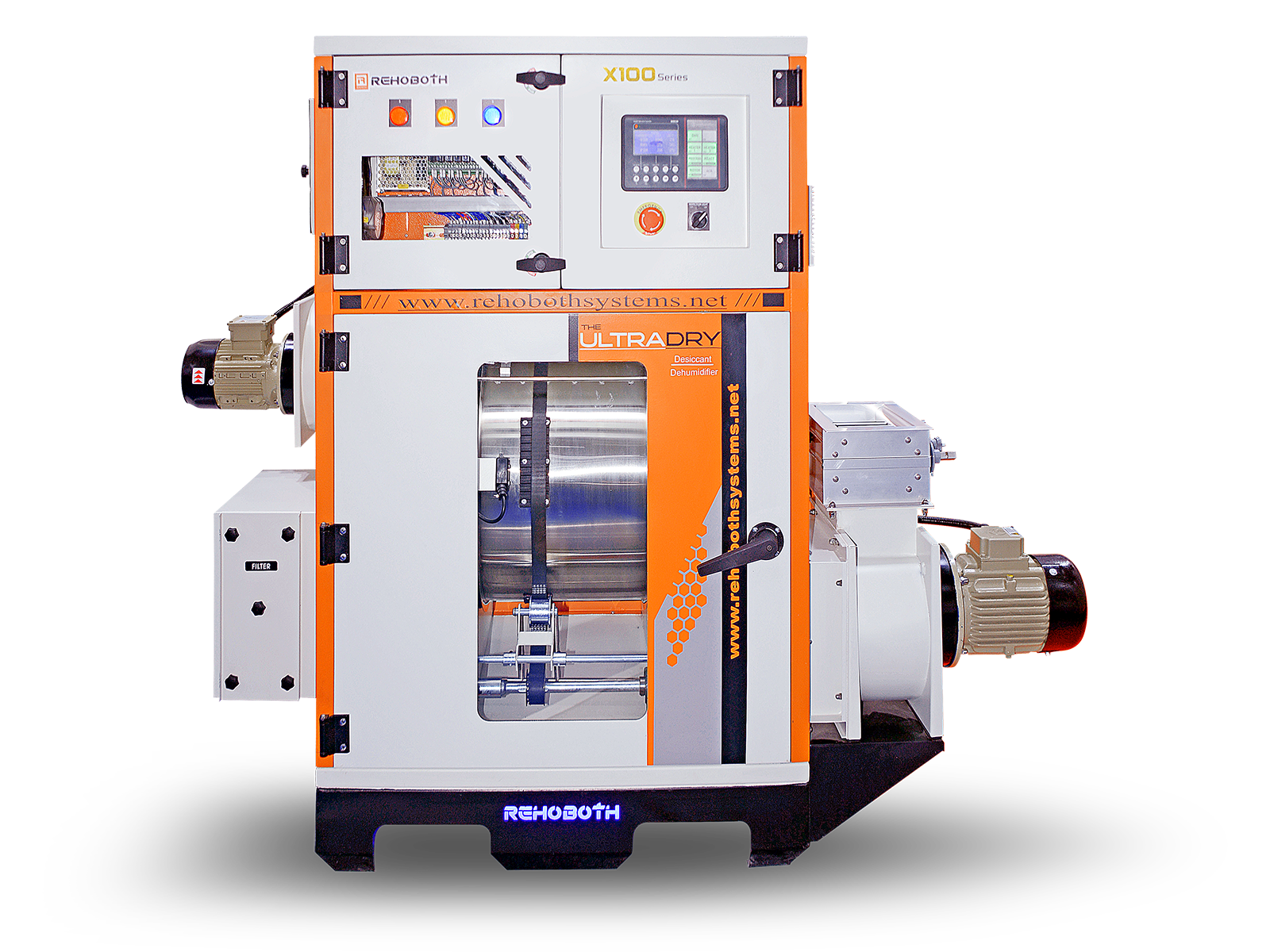
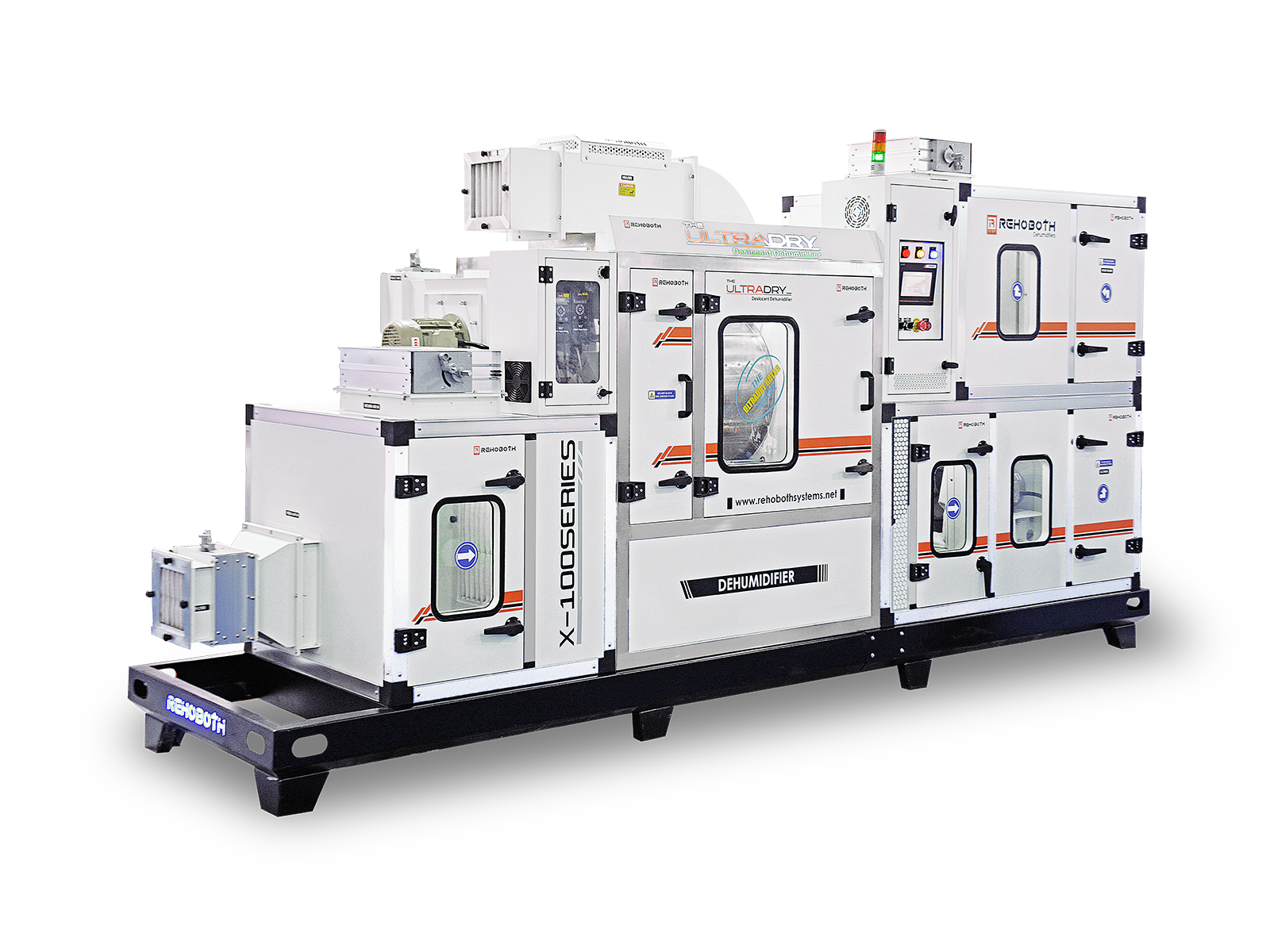
Desiccant rotor dehumidification systems use a slowly rotating wheel coated with moisture-absorbing materials like silica gel or lithium chloride. What makes them particularly attractive for chemical plants is their ability to achieve very low humidity levels regardless of ambient temperature—crucial for catalyst storage and sensitive reaction zones.
The regeneration process is where smart engineering pays dividends. Instead of relying solely on electric heating, modern systems can utilize waste heat from your existing processes, dramatically improving overall energy efficiency.
Advanced Control Integration
Today’s industrial dehumidifiers aren’t standalone units—they’re integrated components of your plant’s digital ecosystem. Modern systems feature wireless humidity sensors, predictive maintenance algorithms, and seamless integration with your Distributed Control System (DCS).
Three Critical Questions for Technology Selection
Before specifying your system, answer these fundamental questions:
- What are your target RH levels and operating temperature ranges? This determines whether refrigerant systems can even reach your targets.
- Is the space occupied or process-critical? Human comfort zones differ significantly from optimal equipment protection zones.
- Do you have access to waste heat for regeneration? This can transform the economics of desiccant systems.
Step-by-Step Dehumidifier Sizing
Getting the sizing right is crucial for both performance and economics:
- Calculate total space volume (length × width × height in cubic meters)
- Determine moisture load sources: Process emissions, infiltration, personnel, and product hygroscopicity
- Sum total moisture load in kg/hr during peak conditions
- Add 20-30% safety margin for unexpected loads or future expansion
- Match dehumidifier capacity to total calculated load
Designing an Effective Humidity Control System for Your Plant
Creating effective chemical plant humidity control systems requires thinking beyond individual equipment to consider your entire facility as an integrated climate ecosystem. [Proper system design is crucial for effective corrosion prevention](https://www.dessica-dryair.com/problematic-corrosion/), and the devil is truly in the details.
Strategic Zoning Approach
Not all areas of your plant have identical humidity requirements. Smart zoning allows you to optimize both performance and operating costs:
- Reaction Zones: Require the tightest control (typically 40-45% RH) due to catalyst sensitivity and safety requirements.
- Bulk Storage Areas: Can tolerate wider ranges (40-55% RH) but need consistent monitoring to prevent condensation on tank walls.
- Laboratory Spaces: Need precise control (45-50% RH) for accurate analytical results and equipment protection.
Packaging/Shipping Areas: Require moderate control (45-55% RH) to prevent product degradation during final processing.
Integration with Existing Infrastructure
Your dehumidification system doesn’t operate in isolation—it must work harmoniously with existing HVAC, explosion-proof ventilation, and process air systems. Key integration points include:
- Air handling unit bypass loops for maintenance without system shutdown
- Isolation dampers to prevent cross-contamination between zones
- Pressure balancing to maintain safe differentials across fire-rated boundaries
- Emergency shutdown interlocks tied to your plant’s safety instrumented systems
Control Logic That Actually Works
Effective humidity control requires more than just on/off switching. Modern control strategies include:
- Cascade control loops that adjust based on both humidity and temperature
- Predictive algorithms that anticipate load changes based on production schedules
- Alarm hierarchies that distinguish between minor deviations and critical failures
- Data logging with trend analysis to optimize setpoints over time
Zoning Worksheet for Your Plant
Create a systematic approach to humidity control by mapping your facility:
- List all distinct areas with different humidity requirements
- Assign risk levels (Critical/High/Medium/Low) based on equipment value and safety impact
- Map airflow patterns and potential moisture migration paths
- Identify isolation opportunities where zones can be independently controlled
Control Specification Template
When developing your RFP, include these critical parameters:
- Primary setpoint: Target RH ± acceptable deviation (e.g., 45% ±3%)
- Alarm thresholds: Warning and critical levels (e.g., >55% RH triggers investigation, >60% triggers shutdown)
- Data logging frequency: Balance between resolution and storage (typically 5-15 minute intervals)
- Integration requirements: Communication protocols for your existing DCS/SCADA systems
Corrosion Prevention Strategies Enabled by Dehumidification
Corrosion prevention dehumidification isn’t just about humidity control—it’s about creating an environment where your most critical assets can operate at peak performance for decades rather than years. [Effective corrosion prevention requires a multi-faceted approach](https://www.stabilitamerica.com/blog/how-to-prevent-corrosion/), with humidity control serving as the foundation for other protective strategies.
Equipment Life Extension Through RH Control
The impact of proper humidity control on equipment longevity is dramatic and measurable. When you maintain RH below critical thresholds, you’re directly extending the service life of:
- Valves and Actuators: Precision components that fail catastrophically when corrosion affects sealing surfaces or moving parts.
- Heat Exchangers: Where even minor corrosion can dramatically reduce efficiency and eventually cause tube failures.
- Instrumentation: Where corrosion-induced drift leads to process upsets and safety system failures.
- Electrical Systems: Where moisture ingress causes ground faults, short circuits, and control system malfunctions.
Industry data shows plants implementing comprehensive humidity control report up to 80% reduction in corrosion-related failures within the first 18 months of operation.
Safety Impact: Beyond Equipment Protection
Lower RH doesn’t just protect equipment—it dramatically reduces ESD prevention chemical facilities risks. In areas handling flammable solvents, catalyst powders, or sensitive electronics, proper humidity control can mean the difference between safe operation and catastrophic incidents.
Static electricity buildup decreases exponentially as RH increases from 30% to 50%, but you must balance this against corrosion acceleration above 60% RH. The optimal range of 40-50% RH provides excellent static dissipation while maintaining corrosion protection.
Complementary Protection Strategies
[Comprehensive corrosion prevention programs](https://www.blastone.com/wp-content/uploads/2021/07/JPCL_dh_ebook.pdf) combine humidity control with other proven techniques:
- Advanced Coatings: Modern epoxy and polyurethane systems provide excellent chemical resistance when applied over properly dehumidified substrates.
- Vapor Phase Inhibitors: Chemical treatments that create molecular-level protection, most effective in controlled humidity environments.
- Cathodic Protection: Electrochemical systems that work synergistically with humidity control to prevent galvanic corrosion.
- Material Selection: Choosing corrosion-resistant alloys becomes more cost-effective when combined with environmental controls.
Five-Point Post-Installation Inspection Checklist
After implementing your dehumidification system, verify corrosion mitigation effectiveness:
- Baseline moisture mapping using calibrated hygrometers throughout the protected space
- Surface inspection of previously affected areas for signs of corrosion progression
- Coating adhesion testing on newly protected surfaces
- Electrical system testing for improved insulation resistance and reduced ground fault incidents
- Static electricity monitoring in critical areas handling flammable materials
Quick-Win Coatings & Inhibitors
Maximize your dehumidification investment with these complementary treatments:
- Zinc-rich primers for steel surfaces in moderate exposure areas
- Vapor barrier coatings for concrete floors and walls
- Desiccant packets for enclosed electrical panels and instrument housings
- Corrosion inhibiting oils for temporary protection during maintenance
ROI Analysis: The Numbers That Matter
Both case studies demonstrate typical payback periods of 12-24 months, with ongoing annual savings of 3-5x the initial investment. The key drivers include:
– Reduced maintenance costs: 60-80% fewer corrosion-related repairs
– Extended equipment life: 2-3x longer service intervals for critical components
– Improved uptime: 2-5% increase in overall equipment effectiveness (OEE)
– Insurance benefits: Lower premiums and reduced deductibles for environmental damage claims
Lessons Learned: Three Critical Pitfalls to Avoid
- Undersizing for peak loads: Design for your worst-case scenario, not average conditions. Summer humidity spikes and process upsets can overwhelm undersized systems.
- Ignoring air infiltration: Uncontrolled outside air can double your moisture load. Invest in proper sealing and controlled ventilation.
- Inadequate backup systems: Single points of failure in humidity control can negate years of corrosion prevention. Plan for redundancy in critical areas.
Project Kickoff Template for Dehumidification Rollout
Phase 1: Assessment (Weeks 1-2)
– Baseline humidity and corrosion surveys
– Load calculations and system sizing
– Integration planning with existing systems
Phase 2: Design (Weeks 3-6)
– Detailed engineering and equipment selection
– Control system programming and testing
– Installation sequencing to minimize downtime
Phase 3: Installation (Weeks 7-10)
– Equipment installation and commissioning
– Control system integration and testing
– Operator training and documentation
Phase 4: Optimization (Weeks 11-14)
– Performance verification and fine-tuning
– Preventive maintenance program development
– Long-term monitoring and reporting protocols
Advanced Trends & Future Directions in Industrial Climate Control
The future of advanced dehumidification systems chemical plants is being shaped by three major trends: energy efficiency, smart automation, and sustainability mandates. Understanding these developments helps you make investment decisions that will remain relevant for decades.
Emerging Technologies Reshaping the Industry
Heat-Regenerated Desiccant Systems: Next-generation units that capture and reuse waste heat from your existing processes, reducing energy consumption by up to 40% compared to electric regeneration.
Energy Recovery Wheels: Sophisticated heat exchangers that pre-condition incoming air using exhaust energy, dramatically improving overall system efficiency.
IoT-Enabled RH Control: Wireless sensor networks that provide real-time humidity mapping across your entire facility, enabling predictive maintenance and optimal control strategies.
Variable Speed Drive Integration: Smart motor controls that adjust dehumidifier capacity in real-time based on actual load conditions, eliminating energy waste from oversized systems.
The Sustainability Imperative
Modern chemical plants face increasing pressure to reduce energy consumption and carbon footprint. Industrial climate control chemical plants are responding with innovative approaches:
–Waste heat integration that turns process heat into dehumidification energy
– Solar-powered regeneration for facilities with adequate roof space and sun exposure
– Thermal storage systems that shift energy consumption to off-peak hours
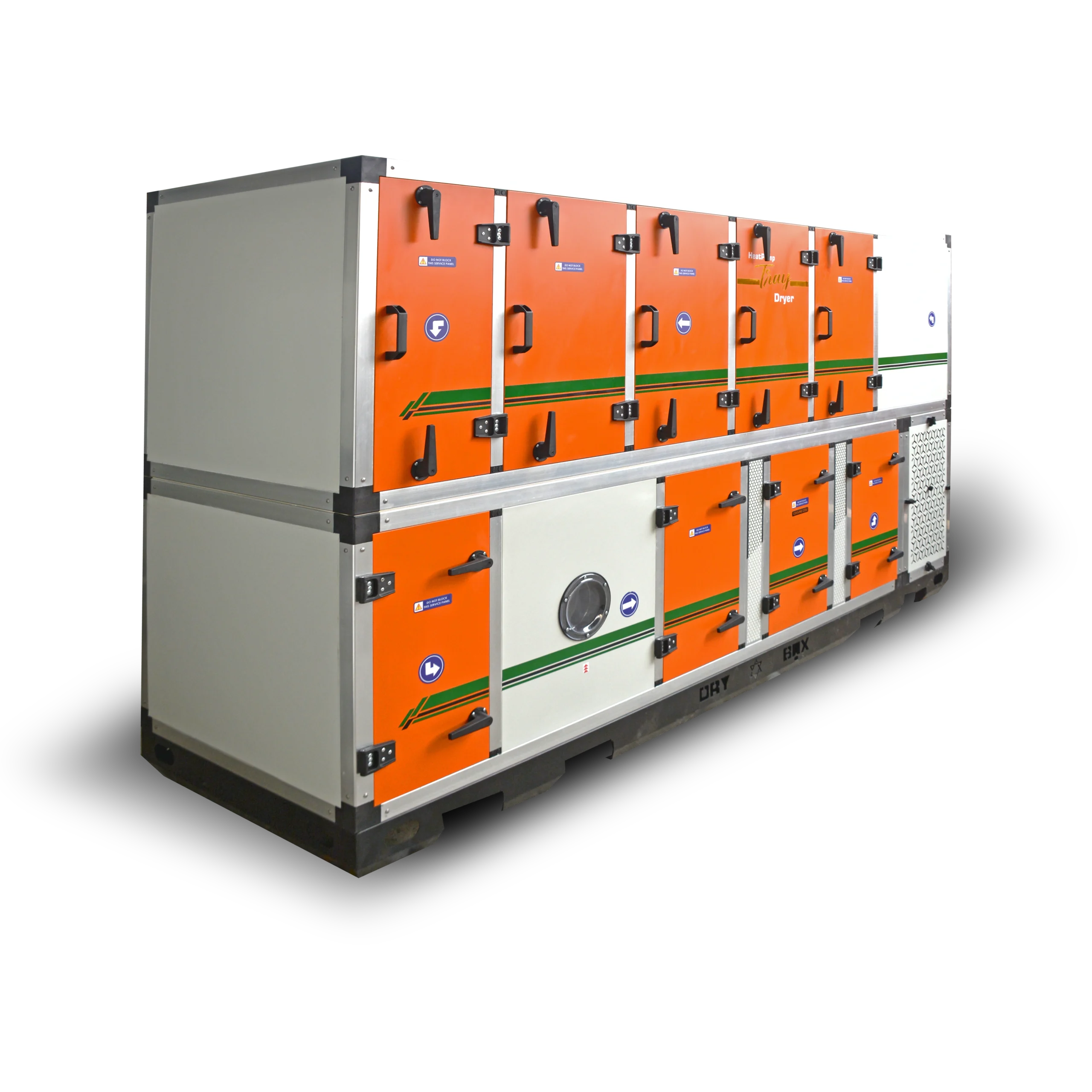
– Heat pump integration that provides both heating and dehumidification from a single system
Regulatory Outlook: What’s Coming
Upcoming OSHA guidelines are expected to strengthen requirements for ESD prevention in chemical facilities, while ATEX regulations in Europe are becoming more stringent about humidity control in explosive atmospheres. Forward-thinking plants are getting ahead of these requirements by implementing comprehensive humidity control now.
Three Questions to Challenge Your Current System’s Energy Efficiency
- Are you utilizing available waste heat for desiccant regeneration, or are you paying for electric heating that could be free?
- Does your control system optimize for total energy consumption across heating, cooling, and dehumidification, or does each system operate independently?
- Are you capturing energy from exhaust air through heat recovery, or are you conditioning 100% outside air year-round?
Pilot Plan: Testing Next-Gen Dehumidifier Technology
Before committing to plant-wide upgrades, consider a pilot installation:
Target Area: Choose a representative space with measurable corrosion issues and quantifiable downtime costs.
Duration: Plan for 6-12 months to capture seasonal variations and establish reliable baseline data.
Metrics: Track energy consumption, equipment reliability, maintenance costs, and environmental conditions.
Expansion Strategy: Use pilot results to build business case for broader implementation.
Conclusion & Immediate Action Plan
Chemical plant dehumidification corrosion prevention isn’t just another maintenance strategy—it’s a fundamental shift toward proactive asset protection that pays dividends in safety, reliability, and profitability. The science is clear, the technology is proven, and the ROI is compelling.
Humidity control serves as your frontline defense against both atmospheric corrosion and electrostatic discharge, protecting everything from million-dollar reactors to sensitive analytical instruments. But like any defensive strategy, it’s only effective when properly implemented and consistently maintained.
Your 5-Step Quick Action Plan
- Audit: Conduct a comprehensive humidity and corrosion assessment of your facility, identifying high-risk areas and quantifying current losses.
. Select Technology:Choose between refrigerant and desiccant systems based on your specific operating conditions and performance requirements.
Design System: Develop an integrated approach that considers zoning, controls, and integration with existing infrastructure.
Implement: Install equipment with proper commissioning, operator training, and documentation.
Monitor: Establish ongoing performance tracking and optimization protocols to ensure long-term success.
The chemical industry’s most successful plants aren’t just processing chemicals—they’re mastering the environment where those processes occur. Corrosion prevention dehumidification gives you that mastery, transforming uncontrolled humidity from a hidden threat into a managed parameter that protects your assets and enhances your operations.
Don’t wait for the next corrosion-related failure to force your hand. The technology exists today to eliminate these costly surprises forever. Your equipment, your workers, and your bottom line will thank you.
Ready to take the next step? Start with that humidity audit—you might be surprised by what you discover.
TL;DR
- Audit humidity levels and corrosion hotspots to pinpoint chemical plant dehumidification corrosion prevention opportunities.
- Use dew point formula T- ((100−RH)/5) to flag high-risk corrosion areas.
- Choose desiccant or refrigerant dehumidifiers based on temperature, RH, and waste heat availability.
- Integrate wireless sensors and DCS to automate chemical plant dehumidification corrosion prevention monitoring.
- Zone facility by critical areas, applying tight 40–50% RH targets for optimal protection.
Ensure every batch meets spec—achieve low, stable RH for APIs, coatings, and cleanrooms with Rehoboth’s pharma‑ready desiccant dehumidifiers. Speak to an engineer for a tailored solution and audit‑ready documentation. REHOBOTH at Email- sales@rbdeh.com, cmnarang@gmail.com / Phone- +91 9811 599 922.
Your Trusted Partner in Temperature and Humidity Control Solutions