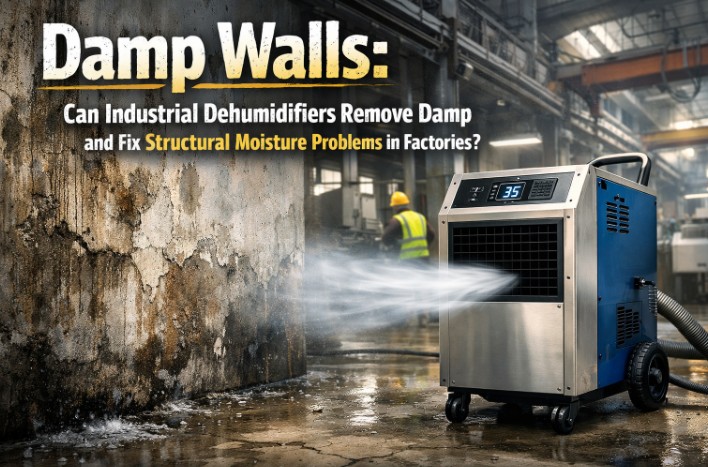
If this scenario feels uncomfortably familiar, you’re not alone. Moisture problems plague industrial facilities worldwide, especially in humid climates or buildings with wet processes. The question isn’t whether you have a problem- it’s whether industrial dehumidifiers can remove damp effectively and prevent the kind of structural damage that leads to costly shutdowns.
Here’s the truth: Industrial dehumidifiers can significantly reduce humidity, dry out damp walls, and prevent ongoing moisture damage in your factory. But- and this is crucial- they work best as part of a systematic moisture strategy, not as a standalone magic bullet.
Understanding the Causes of Moisture Problems in Industrial Environments
The Common Culprits Behind Factory Dampness
Industrial moisture problems typically stem from three main sources:
- Poor ventilation and air circulation – Many older factories were built before modern HVAC standards. Stagnant air creates pockets where moisture accumulates, especially in corners, behind equipment, and along exterior walls.
- Active water intrusion – This includes roof leaks, failed building envelope seals, broken pipes, or rising damp from inadequate damp-proof courses in foundation walls. These are liquid water problems that require structural fixes.
- Process-generated humidity – Manufacturing operations like dyeing, coating, washing, or steam cleaning pump massive amounts of moisture into the air. If your facility handles wet processes, you’re fighting an uphill battle against humidity every single day.
- Condensation from temperature differentials – When warm, humid air meets cold surfaces (think concrete floors in winter or poorly insulated exterior walls), water condenses directly onto those surfaces. This is particularly common in warehouses and facilities with inconsistent heating.
How High Humidity Leads to Structural Damage
Here’s where things get serious. Professional restoration guidance consistently shows that keeping relative humidity below 50% is critical to prevent mold and secondary damage after water intrusion. Above 60% RH, you’re entering the danger zone where mold growth becomes likely, especially on cooler wall surfaces.
But mold is just the beginning. Sustained high humidity causes:
- Efflorescence: Those crusty white deposits appear when moisture dissolves salts in concrete or masonry, then evaporates, leaving minerals behind. It’s not just ugly- it signals that water is moving through your walls.
- Material deterioration: Wood warps and rots, metal corrodes, concrete spalls, and adhesives fail. Your building literally starts falling apart from the inside out.
- Production impacts: Moisture affects product quality in sectors from electronics to food processing.
Your DIY Moisture Audit Checklist
Want to diagnose your facility’s moisture issues? Here’s a quick self-assessment:
- Measure RH in multiple locations using a quality hygrometer (aim for 40-60% RH)
- Check all exterior walls for water stains, discoloration, or soft spots
- Inspect roof penetrations, skylights, and loading dock seals
- Look for condensation on windows, pipes, or equipment in early morning
- Review your ventilation system’s capacity and operation
- Document any wet processes and their proximity to problem areas
This audit helps you distinguish between humidity-driven dampness (where dehumidifiers excel) and active water intrusion (which requires structural repairs first).
How Industrial Dehumidifiers Remove Damp and Restore Structural Integrity
Now we get to the good news. When properly specified and deployed, industrial dehumidifiers are remarkably effective at removing moisture from the air and pulling hidden dampness out of walls, floors, and structural materials.
The Technology Behind Moisture Extraction
There are two main technologies you’ll encounter:
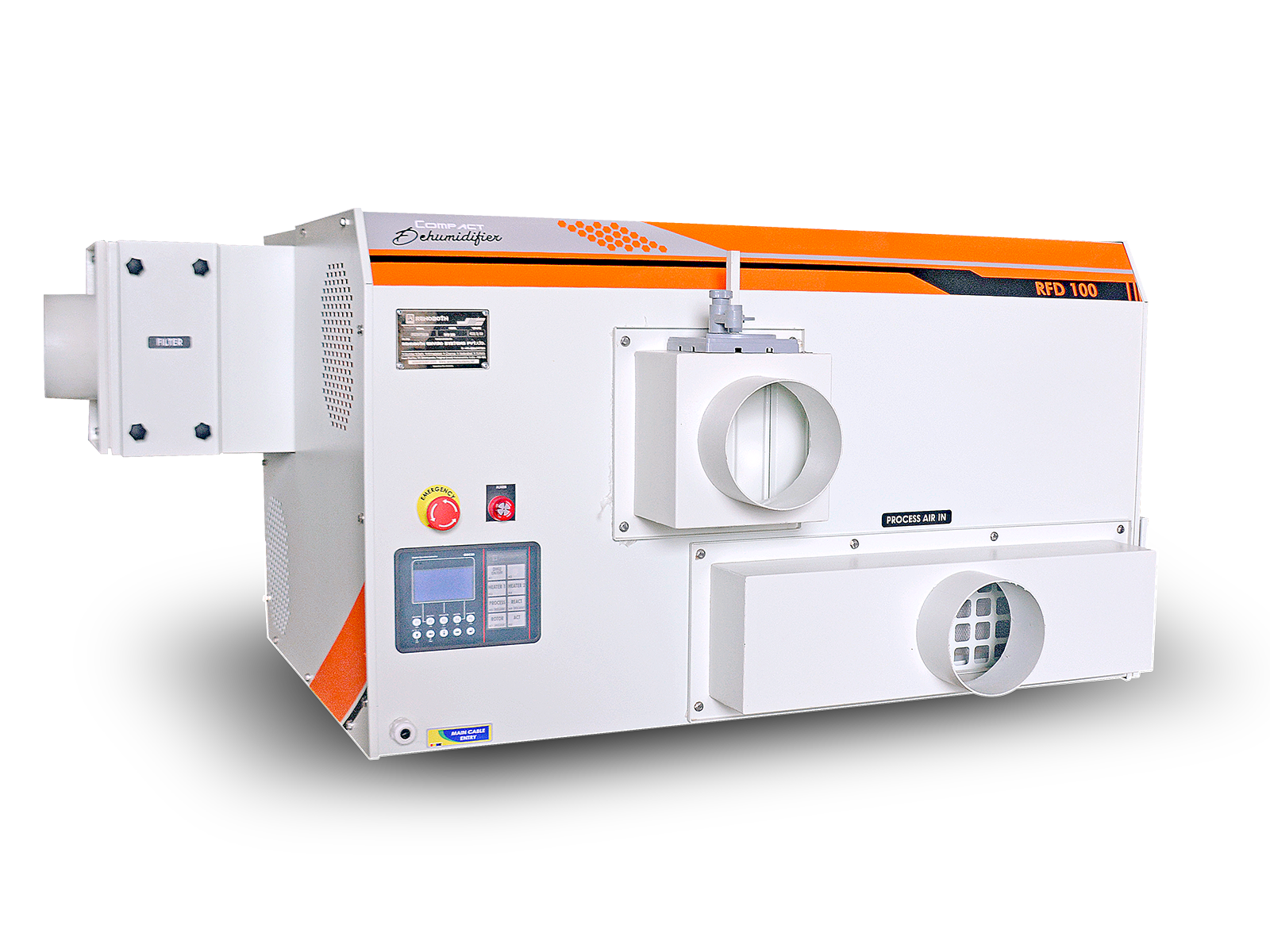
Refrigerant (Condensation) Dehumidifiers work by drawing humid air over cold coils. The air is cooled to condense moisture, then reheated before discharge. Think of it like your air conditioner, but optimized for moisture removal rather than cooling. These units excel in warm, moist environments- exactly what you’ll find in most production halls.
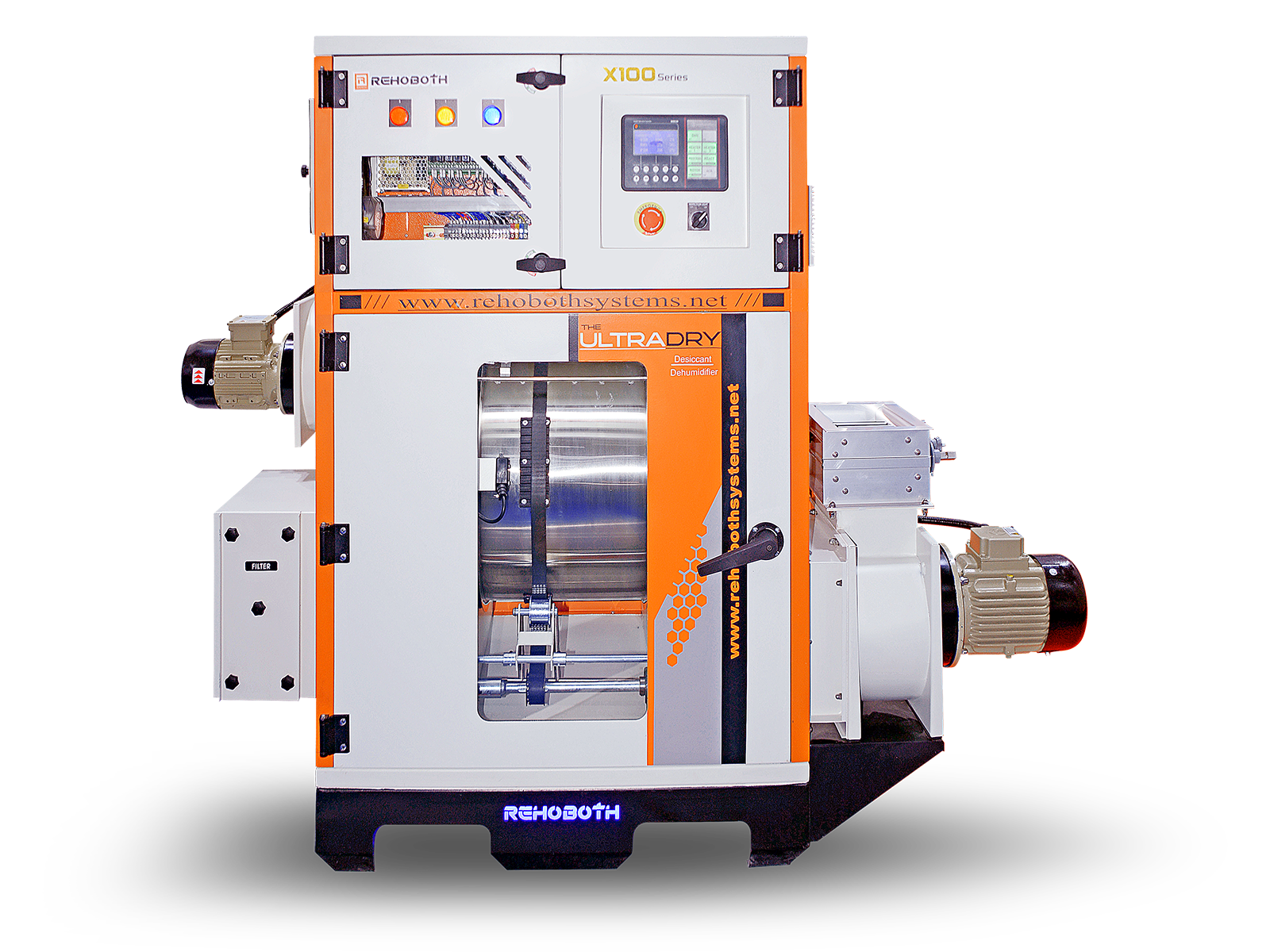
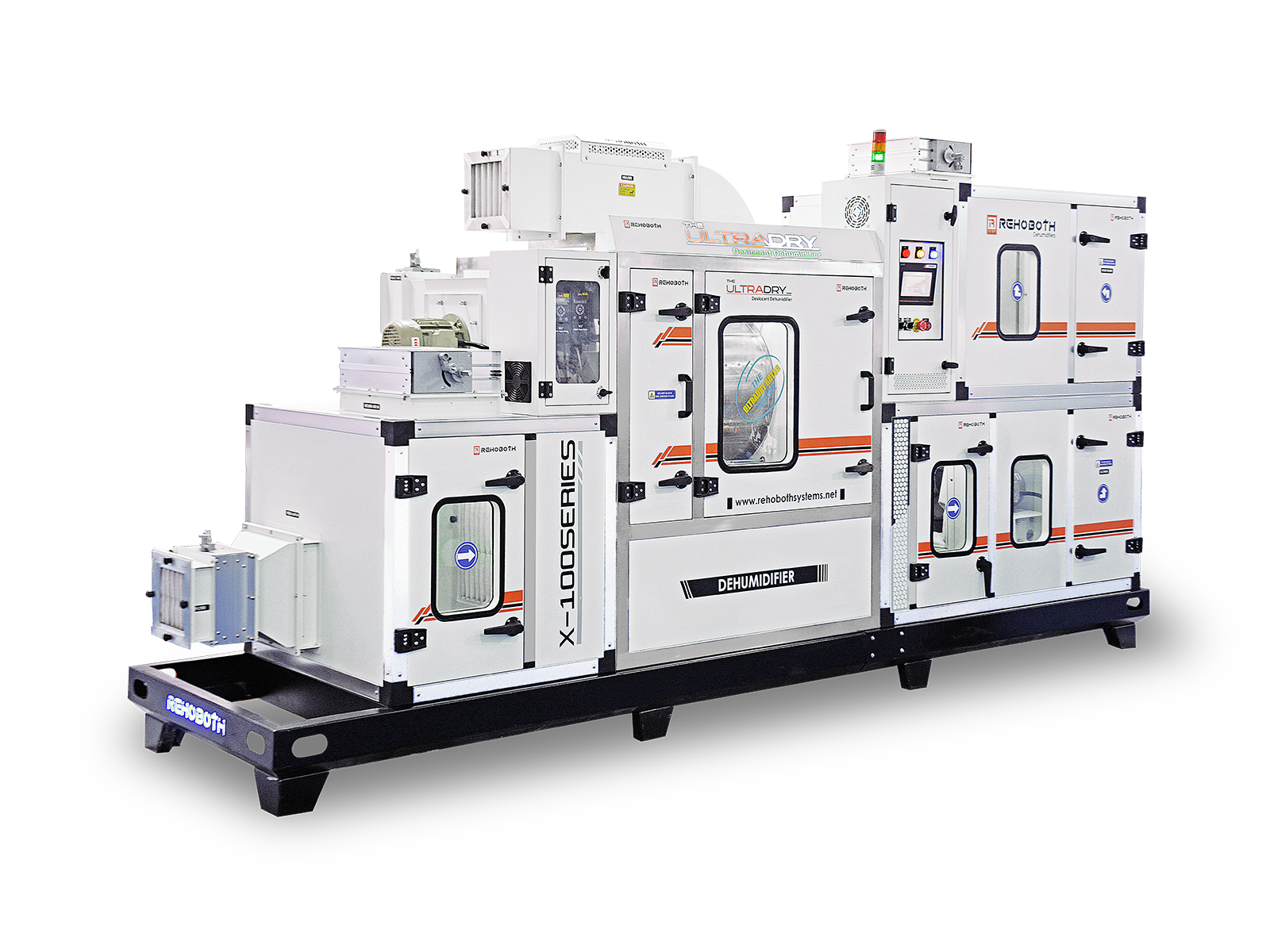
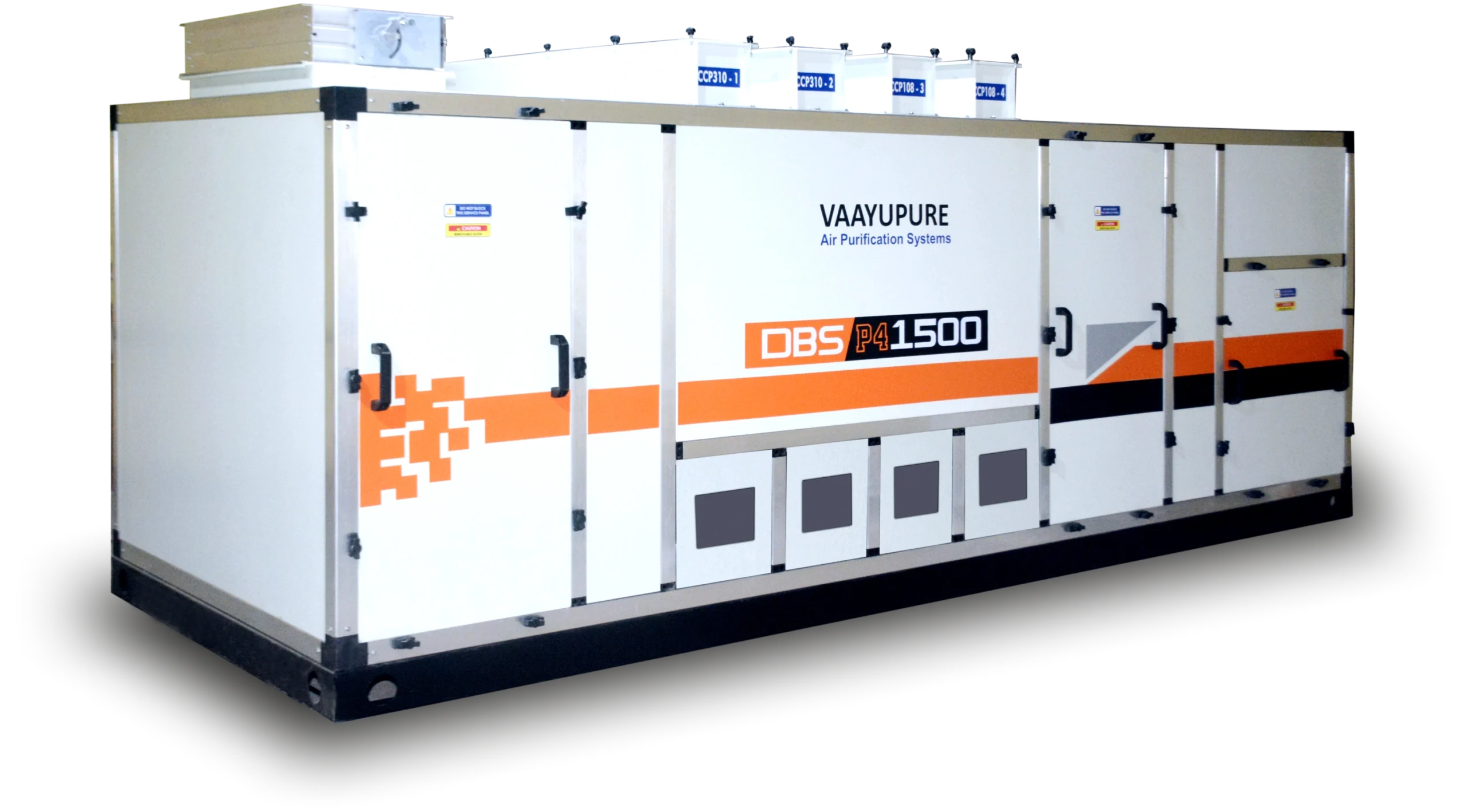
Desiccant Dehumidifiers use hygroscopic materials (like silica gel) to absorb water vapor from the air, then regenerate the desiccant material with heat. These systems perform better in cooler environments or when very low RH is needed, and they’re particularly effective for dense materials like concrete and hardwood.
Step-by-Step Installation Strategy
Want to replicate this success? Here’s your implementation roadmap:
Step 1: Calculate your moisture load – Factor in building volume, outdoor humidity levels, and process-generated moisture. A qualified HVAC engineer can perform load calculations, but as a rough guide, you’ll need approximately 1 pint of daily capacity per 50-70 square feet in moderate humidity, more for wet processes.
Step 2: Select the right technology – Use refrigerant units for warm spaces with moderate humidity control needs. Choose desiccant systems for cold storage, very low RH requirements, or when drying dense concrete structures.
Step 3: Position units strategically – Place dehumidifiers near moisture sources and problem areas, but ensure good air circulation paths. Avoid corners where air stagnates.
Step 4: Integrate airflow – This is non-negotiable. Professional drying standards always pair high-powered air movers with dehumidifiers to accelerate evaporation from wet walls and floors. Without airflow, surfaces dry slowly and internal wall moisture lingers.
Step 5: Monitor and adjust – Install hygrometers to track RH in real-time. Most industrial systems should maintain 45-50% RH for optimal structural protection.
Addressing the Big Objection: “Will It Actually Work?”
You might be thinking: “My walls are seriously damp- can a dehumidifier really fix that?”
The answer is yes, with important caveats. Dehumidifiers can dry damp walls and limit efflorescence when the moisture source is controllable. However, if walls are saturated from active leaks or continuous water intrusion, dehumidifiers alone are insufficient. You must repair the source first.
Think of it this way: Industrial dehumidifiers remove damp conditions and draw moisture out of walls, but they don’t repair structural defects like broken damp-proof courses, failed roof membranes, or active pipeline leaks. Fix the plumbing, then deploy the dehumidification.
Implementing Desiccant Dehumidification for Long-Term Moisture Prevention
Once you’ve got the immediate moisture problem under control, the real question becomes: How do you keep it from coming back? This is where strategic implementation of dehumidification systems- particularly desiccant technology- transforms from a reactive fix into proactive facility management.
Zoning Your Facility for Targeted Moisture Control
Not every square foot of your factory needs the same level of humidity control. Smart facilities create moisture management zones:
High-priority zones include areas with chronic dampness, cold exterior walls, below-grade spaces, and locations near wet processes. These get dedicated dehumidification coverage with continuous monitoring.
Medium-priority zones like general production areas might share centralized dehumidification tied into your HVAC system, with seasonal adjustments for summer humidity spikes.
Low-priority zones such as heated offices or dry storage areas often maintain acceptable RH through normal HVAC operation.
For warehouses and storage facilities, this zoning approach is particularly valuable. Using commercial-grade units prevents the moisture damage that can devastate inventory and structural components, while controlling operating costs by not over-conditioning the entire space.
Smart Monitoring: Your Early Warning System
Here’s where modern technology really shines. IoT-enabled humidity sensors give you real-time visibility into moisture conditions across your entire facility. You can:
- Set alerts for RH thresholds (e.g., notify maintenance if any zone exceeds 55% RH)
- Track seasonal patterns to optimize dehumidifier runtime
- Identify problem areas before visible damage appears
- Document compliance for industries with strict environmental controls
The investment in monitoring pays for itself quickly. One textile manufacturer I consulted with discovered through sensor data that their weekend HVAC shutdown was causing Monday morning condensation on metal equipment. A simple schedule adjustment eliminated the problem- no capital expense required.
Integration with Existing Systems
The most cost-effective dehumidification strategies integrate with your existing building systems rather than operating in isolation:
Pair with ventilation: Use outdoor air economizers when conditions permit. If outdoor air is cooler and drier than indoor air, increased ventilation can reduce your dehumidification load (and energy costs).
Coordinate with heating: Desiccant dehumidifiers generate heat during regeneration. In cold months, position this heat discharge strategically to offset heating costs.
Link to building management systems (BMS): Modern industrial dehumidifiers can integrate with BMS platforms, enabling automated control based on multiple parameters- outdoor conditions, production schedules, energy demand pricing, etc.
This cadence catches small issues before they become expensive problems. Remember: the goal is to maintain conditions that prevent mold growth and material damage, which means staying consistently within that 40-60% RH target range.
Energy-Saving Hacks That Actually Work
Let’s talk about the elephant in the room: energy costs. Industrial dehumidifiers aren’t small appliances- they consume significant power. But smart operators minimize this impact:
Seal the envelope: Every gap, crack, or poorly sealed door is literally leaking your conditioned air (and your money). A $500 investment in weather stripping can save thousands in dehumidification costs.
Schedule strategically: If your utility offers time-of-use pricing, run dehumidifiers during off-peak hours when rates are lower. Many systems can “pre-condition” your space overnight.
Right-size your system: Oversized units cycle on and off frequently, reducing efficiency and equipment life. Undersized units run constantly without achieving target RH. Proper sizing is critical.
Recover waste heat: Some advanced systems capture heat from the dehumidification process for space heating or process water heating- turning an energy cost into an energy source.
Maximizing ROI: Maintenance and Beyond for Industrial Humidity Control
You’ve invested in industrial dehumidification. Now let’s ensure you actually see the return on that investment- and it’s a return that goes far beyond just dry walls.
The Real ROI Calculation
The real value appears in categories you might not immediately consider:
Extended equipment life: Moisture accelerates corrosion and electrical failures in production equipment. Controlling humidity can extend machinery lifespan by 20-40%, deferring major capital expenditures. Read more at- https://rehobothdehumidifiers.com/how-humidity-control-extends-equipment-lifespan-and-reduces-downtime-in-power-plants/
Prevented structural repairs: A single major moisture-related structural failure- collapsed ceiling tiles, spalled concrete requiring resurfacing, or corroded structural steel needing replacement- can cost $20,000 to $200,000+. If your dehumidification system prevents even one such incident over its 10-15 year lifespan, it’s paid for itself several times over.
Reduced downtime: Production stoppages for moisture-related issues cost far more than the repair work itself. Calculate your hourly production value, multiply by typical downtime for moisture incidents, and suddenly that $8,000 dehumidifier looks remarkably cost-effective.
Product quality improvements: For industries where humidity affects product (pharmaceuticals, electronics, food processing, printing), the reduction in defects and rejected batches often exceeds all other ROI factors combined.
Lower insurance premiums: Some commercial insurers offer reduced premiums for facilities with documented moisture control systems, recognizing the reduced risk of water damage claims.
A realistic ROI template might look like this: https://rehobothdehumidifers.com/blog/the-cost-of-inaction-roi-analysis-industrial-dehumidifiers-vs-production-loss
Maintenance That Actually Matters
Industrial dehumidifiers are remarkably robust, but they’re not maintenance-free. Focus your attention where it makes the biggest difference:
Critical monthly tasks:
– Clean or replace air filters (clogged filters reduce capacity by 30-50%)
– Inspect and clear condensate drains (blockages can cause overflow damage)
– Check refrigerant levels on condensation units (low refrigerant kills efficiency)
Quarterly attention:
– Inspect fan motors and bearings for unusual noise or vibration
– Clean condenser and evaporator coils on refrigerant units
– Test automatic controls and safety cutoffs
– Verify accurate RH sensor readings against calibrated reference
Annual professional service:
– Full electrical inspection and connection tightening
– Desiccant media inspection and replacement (typically every 3-5 years)
– Refrigerant system leak testing and charge optimization
– Control system calibration and software updates
One maintenance tip that saves countless service calls: Keep a logbook. Document filter changes, unusual readings, and any operational anomalies. Patterns emerge that help you predict and prevent failures rather than reacting to breakdowns.
Measuring Success: The KPIs That Matter
How do you know your moisture control strategy is actually working? Track these key performance indicators:
RH compliance rate: What percentage of time does each zone stay within target RH? Aim for 95%+ compliance.
Moisture incident frequency: Count occurrences of visible condensation, mold growth, or moisture damage. This should trend toward zero.
Equipment runtime: Track dehumidifier operating hours. Increasing runtime might signal envelope problems or changing facility conditions.
Energy intensity: Monitor kWh per liter of water removed. Declining efficiency indicates maintenance needs or equipment degradation.
Maintenance costs: Track repair and service expenses. Unexpected increases warrant investigation.
Scaling for Multi-Facility Operations
If you’re managing moisture control across multiple locations, standardization becomes your friend:
Standardize equipment: Using the same dehumidifier models across facilities simplifies training, parts inventory, and maintenance contracts.
Centralize monitoring: Cloud-based RH monitoring lets you oversee all facilities from a single dashboard, spotting problems before local teams even notice them.
Share best practices: Create a knowledge base documenting solutions to moisture problems. What worked at Facility A might solve a problem at Facility C.
Negotiate volume contracts: Bulk purchasing of equipment and consolidated service contracts with vendors typically yields 15-25% cost savings.
Common Questions Answered
“How soon will we see results?”
For general humidity reduction, you’ll notice improvement within 24-48 hours. For drying saturated walls, expect 2-6 weeks depending on wall thickness, material, and initial moisture content. Patience pays off- rushing the process by cranking up heat can cause surface hardening that traps moisture inside.
“Can we just use portable units instead of permanent installation?”
For temporary situations (like drying after a flood), absolutely. For ongoing moisture control, permanent systems are more cost-effective and reliable. Portable units get moved around, turned off, or “borrowed” for other purposes, undermining your moisture strategy.
“What if we’re in an extremely humid climate?”
Humid climates make dehumidification more challenging but not impossible. You’ll need higher-capacity systems and may benefit from desiccant technology over refrigerant. The ROI is actually higher in humid climates because the risk of moisture damage is greater.
“Do we need a dehumidifier if we have good HVAC?”
Standard HVAC systems provide some dehumidification as a byproduct of cooling, but they’re not designed for precise humidity control. In high-moisture environments or critical applications, dedicated dehumidification is essential.
Ready to assess your facility’s moisture risk? Bookmark this guide for your maintenance team, measure your baseline RH this week, and take the first step toward permanent moisture control. Your walls- and your production schedule- will thank you. REHOBOTH at Email- sales@rbdeh.com, cmnarang@gmail.com / Phone- +91 9811 599 922.